
Measles Update 2025

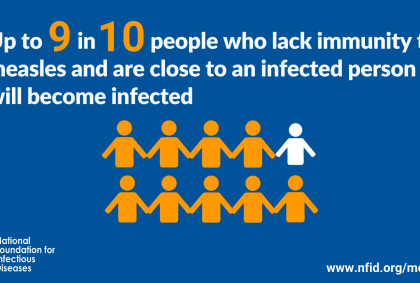
Check out this video from CHOP, created in 2022: Measles: Symptoms, Spread, & SSPE CDC.gov Measles Update Updated: March 5, 2025 Texas The Texas Department of State Health Services is reporting an outbreak of measles in the South Plains region of Texas. At this time, 159 cases have been identified since late January. Twenty of the patients have been hospitalized. There has been one fatality in a school-aged child who lived in the outbreak area. The child was not vaccinated. Counties affected: Dallam (4), Dawson (9), Ector (2), Gaines (107), Lubbock (3), Lynn (2), Martin (3), Terry (22), Yoakum (7). Vaccine Read More …

WHO Recommendations for Influenza Vaccine Composition for 2025-2026

February 28, 2025 The World Health Organization (WHO) today announced the recommendations for the viral composition of influenza vaccines for the 2025–2026 influenza season in the northern hemisphere. The announcement was made at an information session at the end of a 4-day meeting on the Composition of Influenza Virus Vaccines, a meeting that is held twice annually.  The WHO recommends that trivalent vaccines for use in the 2025–2026 northern hemisphere influenza season contain the following:  Egg-based vaccines Cell culture-, recombinant protein- or nucleic acid-based vaccines The recommendation for the B/Yamagata lineage component of quadrivalent influenza vaccines remains unchanged from previous recommendations: Read more

2024-2025 Flu Vaccine Effectiveness

Last week, CDC published flu vaccine effectiveness data, and it’s looking good: 36-54%. The range is due to a combination of different data systems and one strain circulating that is notoriously hard to target with vaccines. Read more!

AMA Update Videos

The American Medical Association is giving communicable disease update videos in lieu of national updates. View them here: https://www.youtube.com/user/AmerMedicalAssn Tuberculosis in Kansas, Ebola Virus Update, and H5N9 Bird Flu: https://youtu.be/HlPBmT_R0po

Data is Slowly Returning

February 10, 2025 Data and communications from the Department of Health and Human Services are slowly coming back on line after a 3-week pause. And we’ve seen some alarming things: Also, let’s not forget that it’s respiratory virus season, and there is an avian influenza outbreak.

CDC Vaccine Information Down

Monday, February 3, 2025 Over the weekend, the CDC.gov website with ACIP-approved Vaccine Schedules and Vaccine Information Schedules was taken offline, to modify them to align with the orders of the Trump administration. Some of that information can be found on our website: https://immunizedelaware.org/vaccine-information/.

HPV Vaccine Prevents Cancer.

From Paul Offit’s “Beyond the Noise:” Human papillomavirus (HPV) causes cancer. Every year, HPV causes about 20,000 cancers in women and 14,000 in men. For women, HPV is the only known cause of cervical cancer, accounting for about 11,000 cases and 4,000 deaths every year. For men, HPV is a common cause of head, neck, anal, and genital cancers. The first vaccine to prevent HPV (Gardasil) was licensed in 2006. With the licensure of an HPV vaccine that protected against additional strains in 2014, the incidence of cervical cancer has dropped 62 percent over the past decade. Perhaps no vaccine Read More …

School Based Health Centers offer Influenza Vaccines

ChristianaCare School Based Health Centers (SBHC) will be offering influenza (flu) vaccine to students beginning in mid-October. There are no co-pays, and they can offer VFC program immunizations. Immunization may be free of charge. SBHCs also offer other vaccines including: Click here for SBHC contact information. Or call the central office at 302-608-5741.

HHS Debuts “Let’s Get Real” Campaign About Childhood Vaccines

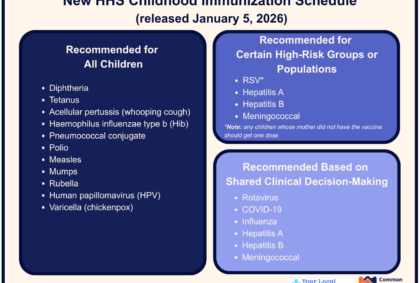
Today, the U.S. Department of Health and Human Services’ (HHS) launched the Let’s Get Real campaign to cut through the noise of misinformation and give parents the balanced information they need about childhood vaccines. The campaign provides verifiable facts so parents can get the information they want to make informed vaccine decisions, and it shares stories from doctors and peers on why most of us rely on vaccines to protect our children. Let’s Get Real also offers tools for health care professionals with pediatric patients.