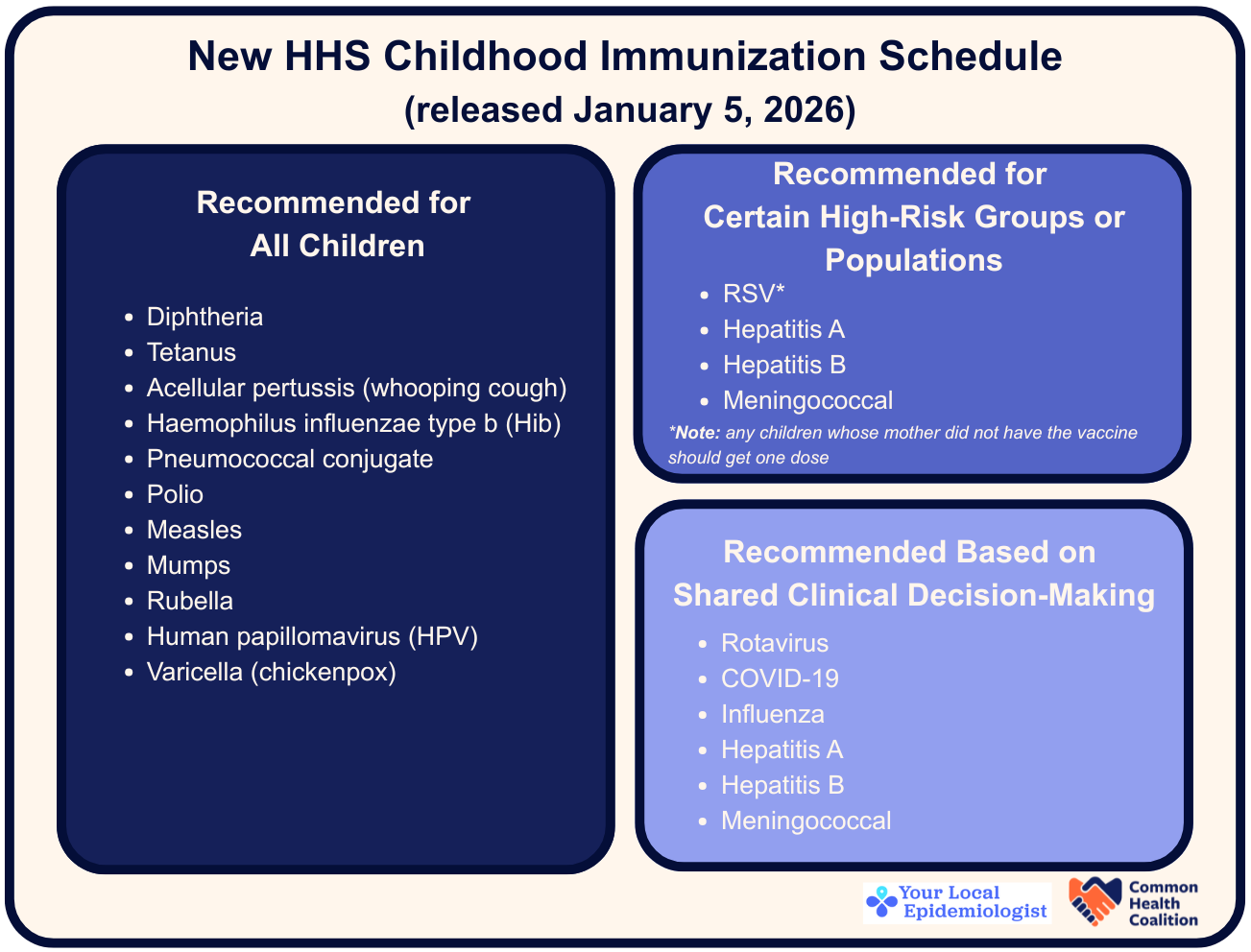
Following a presidential directive to align US recommendations with “peer nations” (like Denmark), HHS and CDC have announced changes to the US childhood immunization schedule. This update reduces the number of recommended vaccines. The remaining vaccines previously on the universal schedule have been moved to risk-based recommendations and/or shared clinical decision-making.
The ICD and the Delaware Academy of Medicine and Public Health are vehemently against this change, and recommend utilizing the science-based recommendations that were in place before this administration.
The American Academy of Pediatrics (AAP) recommended schedule, which follows scientific consensus and facts, can be found (here).
Webinars
Hepatitis B Foundation
Protecting Infants from Day One: Evidence for Hep B Birth Dose Impact and How Clinicians Can Build Parent Confidence (Tuesday, Feb 3, 2026 at 3:30 pm EDT)
This webinar will highlight four decades of evidence showing how universal newborn hepatitis B vaccination helped eliminate HBV transmission and childhood liver cancer among Alaska Native communities. The session will also provide practical strategies for talking with parents about the HepB birth dose, including explaining the vaccine schedule, addressing common concerns, and fostering confidence in early immunization. (Register)
Building Trust at Birth: Improving Hepatitis B Birth Dose & Handling Refusals from HBsAg Positive Mothers (Thursday, Feb 12, 2026 at 1:00 pm EDT)
Co-hosted with the Pennsylvania Department of Health, this webinar will highlight the role of hepatitis B immunization in Pennsylvania, with a focus on state-specific data and best practices. Participants will learn culturally informed strategies to strengthen communication with families impacted by hepatitis B and support improved uptake of the birth dose, especially in situations involving HBsAg-positive mothers. (Register)
National Foundation for Infectious Diseases
Pediatric Vaccine Updates (Monday, January 12, 2026 at 3:00 pm ET)
Join the National Foundation for Infectious Diseases (NFID) to discuss strategies to prevent infectious diseases among children and increase uptake of recommended vaccines. Speakers will review current US vaccine recommendations for children and share effective communication approaches to help increase vaccination rates among children. (Register)
Statements Against this Change
- The American Academy of Pediatrics (statement)
- The Academy’s and the ICD’s response to these changes
- Immunize Colorado (statement)
- Illinois Public Health Association (statement)
- National Foundation For Infectious Diseases (Letter to Congress)
Resources
- Common Health Coalition summary of potential impacts and actions for health leaders (here)
- Brief from the Evidence Collective (here)
- Top Ten Reasons to Vaccinate (from immunize.org) (here)
Four Points to Communicate
- Access. Families should still be able to access the full range of childhood immunizations as recommended by the AAP and the AAFP.
- No Out-of-Pocket Cost. All vaccines (including those moved to shared decisionmaking) remain covered with no out-of-pocket cost by ACA-regulated private insurance plans, federal coverage programs like Medicaid and the VFC program.
- Evidence. The underlying scientific evidence remains unchanged and continues to support the full AAP and AAFP vaccination schedules for children.
- Challenges. These changes will create significant confusion and unnecessary barriers for families and clinicians (i.e., school vaccine requirements, clinical workflows, supply and use of combination vaccines).
The Changes
Action
Cross-sector action – from states, public health agencies, provider groups and systems, and payers – is essential to ensure access for children and families by reducing confusion and mitigating potential impacts from this change. For example:
- Payers can affirm HHS’s statement about continued no-cost coverage for vaccines
- VFC programs can affirm HHS’s statement regarding no change to VFC coverage, and offer clear operational guidance for vaccine providers
- Providers/Hospitals can continue to offer and discuss vaccines with patients, affirm HHS’s statements about continued coverage and liability protections, and share tools/resources to help with patient conversations and clinical workflows.
- States + Public health can take executive or legislative action to ensure access, educate providers and the public to build vaccination confidence, and affirm or offer additional coverage and liability protections for providers.